

Written By  Go Vita
blog
What is Menopause?
MHT: Another Option
Talk To Your Doctor

Menopause: Finding Balance Through Change
Menopause is a natural and significant stage in a woman’s life. While it can bring challenges, it can also be an opportunity to pause, reassess your health and focus on your wellbeing for the decades ahead.
For some women, menopause symptoms are mild and manageable. For others, hormonal changes can significantly affect sleep, energy, mood, concentration, body composition and quality of life. The good news is that women have options.
A natural approach may include nutrition, exercise, stress management, sleep support, acupuncture and carefully selected herbal medicines. For some women, menopausal hormone therapy (MHT) may also be an appropriate and effective option. The important thing is understanding your choices and deciding what is right for you.
A Time for Reconnection
Menopause can be a time to reconnect with your body and pay closer attention to what it needs.
Hormonal changes during perimenopause and menopause can influence far more than the menstrual cycle. Oestrogen receptors are found throughout the body, which helps explain why declining oestrogen can affect the brain, bones, heart, skin, vaginal and urinary tissues and temperature regulation.
This is also a time when healthy lifestyle habits become increasingly important. Regular movement, nourishing food, adequate protein, quality sleep, stress management and maintaining meaningful social connections can all contribute to healthy ageing.
Rather than simply trying to manage individual symptoms, menopause provides an opportunity to take a broader view of your health and establish habits that support you well beyond menopause.
What is Menopause?
Menopause is officially reached when a woman has gone 12 consecutive months without a menstrual period, provided there is no other medical explanation. It most commonly occurs between the ages of 45 and 55, although the timing varies between women.
The years leading up to menopause are known as perimenopause. During this stage, ovarian hormone production becomes increasingly variable, followed by a decline in oestrogen and progesterone. Testosterone also gradually declines across the lifespan.
Periods may become irregular, heavier or lighter, and the time between cycles may change. Symptoms can begin during perimenopause and may continue for several years after the final menstrual period.
Although fertility declines during this time, pregnancy is still possible during perimenopause. If pregnancy is not desired, discuss contraception with your healthcare professional.
Common Symptoms
-
Every woman's experience of menopause is different. Some women experience very few symptoms, while others find that changes significantly affect their everyday life.
Common symptoms include:
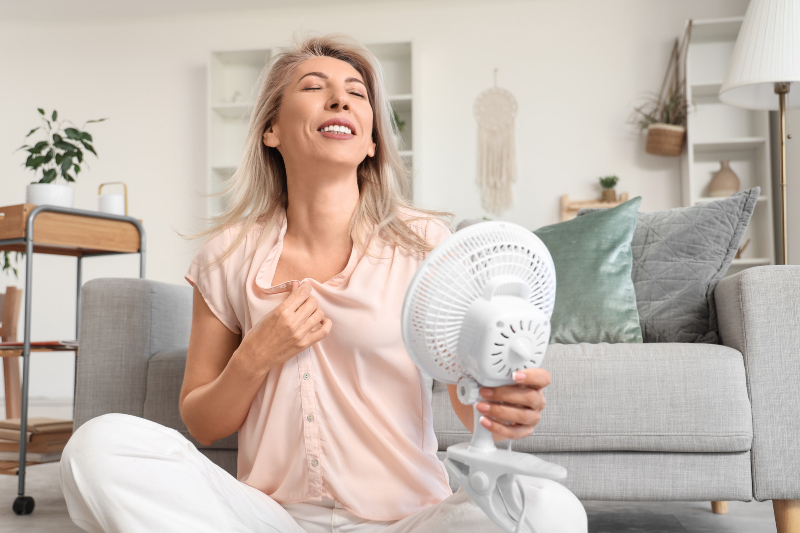
Hot flushes and night sweats – Sudden feelings of heat, flushing and sweating can occur during the day or night. Night sweats can disrupt sleep and contribute to tiredness and reduced energy the following day. -
Sleep disturbance – Difficulty falling asleep, waking during the night or early morning waking can become more common during perimenopause and menopause.
-
Mood changes – Anxiety, irritability, low mood and increased emotional sensitivity can occur. Hormonal changes, poor sleep and life stress can all contribute.
-
Brain fog and cognitive changes – Forgetfulness, difficulty concentrating and feeling mentally less sharp are commonly reported.
-
Changes in libido – Sexual desire can change due to hormonal changes, fatigue, stress, sleep disturbance and other physical or emotional factors.
-
Vaginal and urinary changes – Declining oestrogen can contribute to vaginal dryness, discomfort during sex and urinary symptoms.
-
Changes in body composition – Maintaining muscle and managing body composition can become more challenging as we age and hormones change.
-
Headaches and palpitations – Some women notice changes in headaches or episodes of awareness of their heartbeat.
Natural Ways to Support Yourself
There are many practical ways to support your wellbeing throughout the menopause transition.
Move Your Body
Exercise is one of the most valuable tools during midlife. A combination of resistance training, weight-bearing exercise and aerobic activity can help maintain muscle strength, support bone density, cardiovascular health and healthy body composition.
Maintaining muscle becomes particularly important as we age. Strength training can also support balance, physical confidence and independence later in life.
Prioritise Protein and Nourishing Food
Menopause is an excellent time to pay greater attention to nutrition. Adequate protein helps support muscle maintenance, while vegetables, fruit, legumes, wholegrains, nuts, seeds and other minimally processed foods provide a broad range of nutrients. Calcium and vitamin D are particularly important for bone health, while fibre and healthy fats can form part of a heart-healthy eating pattern. Rather than focusing on restrictive diets, aim for nutrient-dense, satisfying meals that support energy, muscle and metabolic health.
Manage Stress
Stress and menopause can create an unpleasant feedback loop. Hormonal changes can make some women feel more sensitive to stress, while ongoing stress can contribute to poor sleep, anxiety and increased awareness of hot flushes. Regular exercise, meditation, deep breathing, yoga, time outdoors and counselling can all help support stress management.
Social connection matters too.
Maintaining friendships, family relationships, community involvement and meaningful activities can support emotional wellbeing and resilience during this period of change.
Support Better Sleep
Good sleep is fundamental to health, yet it can become more difficult during perimenopause and menopause. Night sweats, hormonal changes, stress and anxiety can all contribute. A consistent bedtime routine, a cool bedroom, regular daytime exercise and reducing alcohol and caffeine when they interfere with sleep may help.
If persistent insomnia is affecting your daily life, don't simply accept poor sleep as an inevitable part of menopause. Discuss it with your healthcare professional.
Dress for Comfort and Know Your Triggers
Breathable clothing and removable layers can make hot flushes easier to manage.
Some women find that alcohol, caffeine, spicy foods, hot drinks, stress or warm environments trigger or worsen symptoms. Triggers vary, so keeping a simple symptom diary can help you identify your own patterns.
Acupuncture
Acupuncture may be considered as part of an integrative approach to managing some menopausal symptoms. Research suggests it may provide benefit for some women experiencing symptoms such as hot flushes and sleep disturbance. If you are interested in acupuncture, choose a suitably qualified and registered practitioner who can assess your individual circumstances.
Herbal Support
Herbal medicines have traditionally been used to support women through hormonal transitions. However, natural does not automatically mean safe or suitable for everyone. Herbs can have pharmacological effects and may interact with prescription medicines.
A qualified naturopath or appropriately trained healthcare professional can assess your individual symptoms, health history and medications before recommending herbal support.
Herbs traditionally used in menopause support include:
-
Sage (Salvia officinalis) – Traditionally used for excessive sweating and may be considered when hot flushes and night sweats are prominent.
-
Ziziphus (Ziziphus jujuba var. spinosa) – Traditionally used in Chinese medicine to support relaxation and sleep and to calm the mind.
-
Vitex (Vitex agnus-castus) – Traditionally used to support menstrual and premenstrual symptoms and may be considered during the perimenopausal years when cycle-related symptoms are present.
-
Bupleurum (Bupleurum species) – Used traditionally in Chinese medicine in formulas addressing patterns associated with hormonal and emotional changes.
Herbal medicine should be personalised rather than selected simply because a herb is associated with a particular symptom.
MHT: Another Option
For some women, symptoms are significant enough that menopausal hormone therapy (MHT) is worth considering. MHT can be highly effective for symptoms such as hot flushes and night sweats and can also have important benefits for bone health.
Choosing MHT is a personal decision. There is no requirement to take it, and there is no prize for avoiding it. Equally, choosing MHT does not mean you have failed to manage menopause “naturally”.
The right decision depends on your symptoms, age, time since menopause, medical and family history and individual risk factors.
Why Is Oestrogen So Important?
Oestrogen does much more than regulate the menstrual cycle. It has important effects throughout the body.
Oestrogen plays a role in:
• Brain health – supporting brain function, mood and cognitive processes.
• Bone health – helping maintain bone density and slowing bone loss after menopause.
• Cardiovascular health – influencing blood vessels and cardiovascular function.
• Skin health – supporting skin thickness, collagen, elasticity and hydration.
• Vaginal and urinary health – helping maintain healthy tissues.
• Temperature regulation – declining oestrogen can contribute to hot flushes and night sweats.
This is why menopause is about much more than periods and hot flushes. The decline in oestrogen can affect multiple systems throughout the body.
Why Is Progesterone Added?
If you still have a uterus and are prescribed systemic oestrogen, a progestogen is generally added to protect the lining of the uterus, known as the endometrium.
Oestrogen stimulates growth of the uterine lining. Without adequate progestogen, ongoing stimulation can cause the lining to become excessively thick, increasing the risk of endometrial hyperplasia and, over time, endometrial cancer.
Progesterone or a suitable progestogen therefore has an important protective role. Women who have had a hysterectomy generally do not need a progestogen for this purpose, although individual circumstances vary.
What Does “Bioidentical” Mean?
You may have heard the term bioidentical hormones used when discussing MHT. This terminology can be confusing.
Some regulated prescription MHT products contain hormones that are chemically identical or very similar to hormones produced naturally by the human body. For example, 17β-oestradiol used in many MHT products is chemically identical to the oestradiol produced by the ovaries, while micronised progesterone is structurally identical to naturally occurring human progesterone. This is different from some of the older forms of HRT, which commonly used conjugated equine oestrogens and synthetic progestins.
Modern MHT also provides a range of formulations, including oestrogen patches, gels, sprays and oral preparations, allowing treatment to be tailored to the individual.
What Does PBS Mean?
In Australia, some MHT products are available through the Pharmaceutical Benefits Scheme (PBS), allowing eligible patients to access subsidised treatment when the relevant PBS requirements are met.
Your doctor or pharmacist can explain which products are currently PBS-listed and whether you are eligible.
If You Choose MHT, You Can Still Support Yourself Naturally
Choosing MHT does not mean you have to abandon healthy lifestyle or complementary approaches.
In fact, many of the foundations of healthy ageing remain important whether or not you use MHT. Resistance and weight-bearing exercise, adequate protein, a nutrient-dense diet, good sleep, stress management, maintaining social connections and avoiding smoking all support health through midlife and beyond.
A naturopath can help support areas such as nutrition, exercise, sleep, stress, digestive health and appropriate complementary therapies alongside your medical care.
If you are taking MHT, make sure your doctor and naturopath are aware of all medicines, herbs and supplements you are using so that potential interactions and contraindications can be considered.
Talk To Your Doctor
If you are considering MHT, make an appointment with your GP or another appropriately qualified medical practitioner. They can discuss your symptoms, take a detailed medical and family history, assess your individual benefits and risks and determine whether MHT is suitable for you.
Your suitability may also change over time, so ongoing review is important. There is no one “right” way to experience menopause.
You may choose MHT. You may choose natural and lifestyle approaches. You may choose a combination. Or you may choose no treatment at all.
What matters is that you have accurate information, understand the benefits and risks of your options and make a decision that is right for you.
Menopause Is a Transition, Not the End of Wellbeing
Menopause is a significant transition, but it doesn't have to define how you feel for the next stage of your life.
This can be an opportunity to become stronger, prioritise your health, address areas that may have been overlooked and build habits that support healthy ageing for years to come.
With the right information and personalised support, menopause can be less about simply managing symptoms and more about investing in your health, vitality and future wellbeing.
Where To Find Help
Always speak with a qualified healthcare professional before commencing MHT, herbal medicines or supplements, particularly if you take prescription medication or have an existing health condition.
Information presented is for information purposes only and is not intended to replace advice or treatment from qualified healthcare professionals. The information is not intended to treat or diagnose. Always consult your healthcare professional before taking nutritional or herbal supplements. If you are pregnant, breastfeeding, have any allergies or diagnosed conditions, or are taking prescription medications, always consult your healthcare professional before taking nutritional or herbal supplements.
Binge Read on these

Go Mag Issue 78
Discover the latest issue of Go Mag – Issue 78, your go-to guide for natural health, wellbeing...

Blueberry Matcha Collagen Delight

How to Manage Stress and Build Stress Resilience

Ashwagandha: Supporting Stress Resilience in a Busy World
Go Mag Issue 78
Discover the latest issue of Go Mag – Issue 78, your go-to guide for natural health, wellbeing...
Blueberry Matcha Collagen Delight
How to Manage Stress and Build Stress Resilience
Ashwagandha: Supporting Stress Resilience in a Busy World